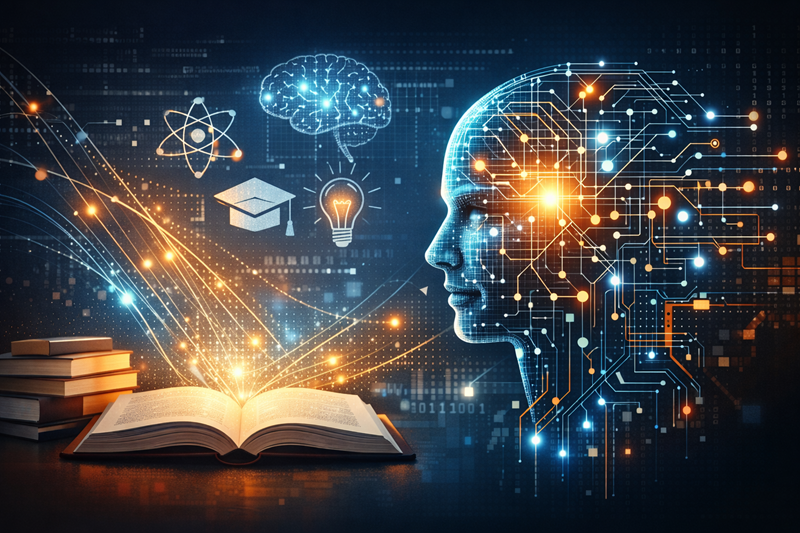
AI in the Classroom: Benefits, Challenges, and the Future of Learning (SEO‑Optimized Full Content)
Artificial intelligence is reshaping modern education, offering new ways to personalize learning, automate tasks, and support teachers. At the same time, it introduces challenges around ethics, equity, and data privacy. Schools, educators, and policymakers are now navigating how to integrate AI responsibly while maximizing its benefits.
What Is AI in the Classroom?
AI in education refers to tools and systems that analyze data, adapt to student needs, automate tasks, or support instructional decision‑making. These include adaptive learning platforms, intelligent tutoring systems, automated grading tools, and AI‑powered analytics dashboards.
Benefits of AI in the Classroom
1. Personalized Learning at Scale
One of the strongest advantages of AI is its ability to tailor instruction to each student’s needs. AI systems analyze performance data and adjust difficulty, pacing, and content in real time. This helps students learn at their own speed and improves engagement and outcomes.
Why it matters for SEO: Searchers frequently look for “personalized learning benefits,” “adaptive learning,” and “AI individualized instruction.”
2. Automated Administrative Tasks
Teachers spend significant time grading, tracking attendance, and managing paperwork. AI tools can automate:
-
Multiple‑choice grading
-
Short‑answer scoring
-
Attendance tracking
-
Data entry
This frees teachers to focus on instruction and student relationships.
3. Enhanced Student Engagement
AI‑powered tools—such as gamified learning apps, VR/AR experiences, and intelligent tutoring systems—make learning more interactive and motivating. These tools help students stay engaged and deepen understanding.
4. Data‑Driven Insights for Teachers
AI can analyze large amounts of student data to identify patterns, learning gaps, and at‑risk students. This helps educators:
-
Adjust instruction
-
Provide targeted interventions
-
Improve curriculum design
5. Support for Diverse Learning Needs
AI tools can improve accessibility for students with disabilities or language barriers. Examples include:
-
Speech‑to‑text for hearing‑impaired students
-
Reading assistants for dyslexia
-
Real‑time translation for multilingual learners
Challenges of AI in the Classroom
1. Data Privacy and Security
AI systems often rely on sensitive student data. Schools must ensure strong protections to prevent misuse, breaches, or unauthorized access.
2. Bias and Fairness
AI models can reinforce existing biases if trained on incomplete or unrepresentative data. UNESCO warns that AI must be used ethically to avoid marginalizing cultures, languages, or regions.
3. Digital Divide
Not all students have equal access to devices or reliable internet. AI can widen inequities unless schools provide adequate resources and support.
4. Teacher Training and Readiness
Teachers remain irreplaceable, but they need training to use AI effectively and ethically. UNESCO emphasizes that educators must be empowered to shape AI use—not be shaped by it.
5. Fear of Replacing Teachers
AI can support instruction, but it cannot replicate human empathy, emotional understanding, or social connection. Experts stress that AI should enhance—not replace—teachers.
The Future of AI in Learning
1. More Personalized, Adaptive Learning Environments
AI will continue to refine individualized learning pathways, helping students progress at their own pace with real‑time feedback.
2. AI‑Enhanced Lesson Planning
AI paired with proven instructional frameworks—such as Rosenshine’s Principles—can dramatically improve lesson design and student performance.
3. Greater Focus on AI Literacy
Students will need to understand how AI works, its limitations, and how to use it responsibly. This includes critical thinking, ethical reasoning, and digital citizenship.
4. More Inclusive and Accessible Classrooms
AI‑powered translation, accessibility tools, and adaptive interfaces will help schools support diverse learners more effectively.
5. Stronger Ethical and Regulatory Frameworks
UNESCO and global education leaders emphasize the need for:
-
Ethical AI policies
-
Transparent data practices
-
Sustainable AI use
-
Teacher involvement in policy design
Conclusion
AI in the classroom offers transformative benefits—from personalized learning to improved accessibility—but it also brings challenges around equity, ethics, and teacher readiness. The future of AI in education depends on responsible implementation, strong teacher training, and policies that prioritize student well‑being and fairness.
Schools that embrace AI thoughtfully will be better positioned to prepare students for a rapidly evolving digital world.
Better stories are possible — and they start with preparation.
Start the Course